
Immediate help: If you or someone you know may be in immediate danger or is considering self-harm, call or text 988 or go to the nearest emergency department.
What is treatment-resistant depression?
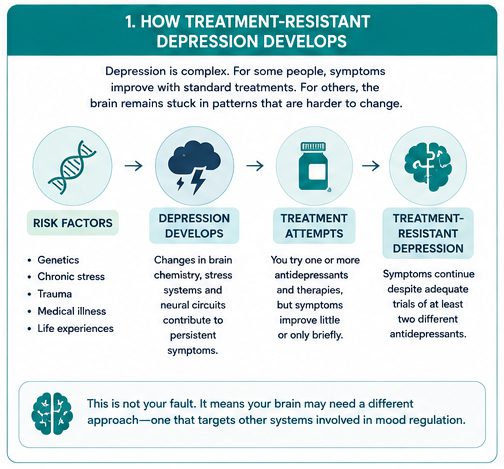
Major depressive disorder is one of the most common mental health conditions in the United States, affecting millions of adults each year. While many people experience significant improvement with antidepressant medication, psychotherapy, or a combination of both, others continue to experience symptoms despite following their treatment plan carefully.Healthcare providers generally consider depression to be treatment-resistant when at least two antidepressants from different medication classes fail to produce meaningful improvement, assuming the medications were taken consistently, at appropriate doses, and for a sufficient length of time. In most cases, this means each medication has been tried for approximately six to eight weeks, although treatment plans vary depending on the individual and the prescribing clinician.
Reaching a diagnosis of treatment-resistant depression is not simply a matter of counting failed medications. Before concluding that depression is treatment-resistant, psychiatrists typically review several additional factors that may influence treatment response. These include whether medications were taken as prescribed, whether the dosage was appropriate, whether enough time was allowed for the medication to work, and whether another medical or psychiatric condition could be contributing to persistent symptoms.
For example, untreated thyroid disorders, chronic pain conditions, vitamin deficiencies, sleep disorders such as obstructive sleep apnea, alcohol or substance use disorders, bipolar disorder, anxiety disorders, and certain neurological conditions can all affect mood and influence how well antidepressant medications work. Identifying and addressing these factors is an important part of developing an effective treatment plan.
Researchers now understand that depression involves far more than serotonin alone. Traditional antidepressants primarily target serotonin, norepinephrine, or dopamine pathways, but depression is also associated with changes in glutamate signaling, neuroplasticity, inflammation, stress hormone regulation, and communication between different brain regions. These discoveries have fundamentally changed how specialists approach treatment-resistant depression and have led to the development of therapies that work through entirely different biological mechanisms.
One of the most significant advances has been the use of ketamine-based therapies. Unlike conventional antidepressants, ketamine acts on glutamate receptors and appears to promote the formation of new neural connections—a process known as neuroplasticity. This different mechanism of action may help explain why many patients experience improvement much more quickly than they do with traditional antidepressants.
Recent peer-reviewed research published through the National Library of Medicine continues to support glutamate-targeting therapies as an important advancement in the treatment of resistant forms of depression, while ongoing research funded by organizations such as the National Institute of Mental Health (NIMH) is helping clinicians better understand why some individuals respond differently to specific treatments.
Symptoms of Treatment-Resistant Depression
Quick Answer
The symptoms of treatment-resistant depression are similar to those of major depressive disorder, but they continue despite appropriate treatment. Many people experience persistent sadness, emotional numbness, loss of interest in activities, fatigue, changes in sleep or appetite, difficulty concentrating, feelings of hopelessness, and trouble functioning at work or maintaining relationships. If symptoms remain after trying two antidepressants at appropriate doses, it may be time to discuss additional treatment options with a qualified mental health professional.
At first glance, treatment-resistant depression can look very similar to major depressive disorder. The difference isn't necessarily the type of symptoms—it is how long they persist and how they respond to treatment.
Many people describe a frustrating cycle. A new medication provides hope, followed by weeks of waiting, only to discover that little has changed. Sometimes there is slight improvement, but not enough to restore quality of life. Others experience temporary relief before symptoms gradually return.
For many patients, the emotional toll extends beyond depression itself. Repeated unsuccessful treatments can lead to discouragement, uncertainty, and concerns that nothing will ever work. Those feelings are understandable, but they do not mean recovery is out of reach. Advances in depression treatment have created new options for people who have not responded to conventional medications.
Emotional Symptoms
People living with treatment-resistant depression often continue to experience:
- Persistent sadness or low mood
- Feelings of emptiness
- Hopelessness about the future
- Increased irritability
- Excessive guilt or self-criticism
- Loss of self-confidence
- Emotional numbness or feeling "disconnected"
- Frequent crying or inability to experience positive emotions
Some people describe their depression as feeling trapped behind a sheet of glass—able to observe life but unable to fully participate in it.
Physical Symptoms
Depression affects far more than mood. It can influence nearly every aspect of physical health.
Common physical symptoms include:
- Constant fatigue
- Low energy despite adequate sleep
- Insomnia or excessive sleeping
- Changes in appetite
- Weight gain or weight loss
- Slower movement or speech
- Restlessness
- Frequent headaches
- Muscle tension
- Digestive discomfort
- Reduced interest in intimacy
Because these symptoms overlap with other medical conditions, physicians often evaluate thyroid disease, anemia, vitamin deficiencies, chronic pain disorders, sleep apnea, and other health conditions before confirming treatment-resistant depression.
Cognitive Symptoms
Many patients say the most disabling part of depression isn't sadness—it's the inability to think clearly.
These symptoms may include:
- Difficulty concentrating
- Memory problems
- Slower processing speed
- Trouble making decisions
- Difficulty completing simple tasks
- Reduced creativity
- Mental fatigue
- Feeling overwhelmed by everyday responsibilities
Researchers increasingly recognize that depression affects brain networks involved in executive functioning, learning, and memory—not just mood regulation.
Behavioral Changes
Treatment-resistant depression often changes the way people interact with the world around them.
Someone who once enjoyed spending time with family or friends may begin declining invitations. Hobbies that previously brought joy may feel exhausting or meaningless. Even simple daily routines such as preparing meals, exercising, or answering emails can become overwhelming.
Friends and family sometimes misinterpret these changes as laziness or lack of motivation. In reality, these behaviors are common symptoms of depression rather than personal choices.
Changes at Work or School
For many New Yorkers, depression becomes most noticeable in professional or academic settings.
Someone working in Manhattan's Financial District, attending college in Brooklyn, teaching in Queens, or commuting from Long Island may notice increasing difficulty with:
- Meeting deadlines
- Staying organized
- Completing projects
- Remembering conversations
- Maintaining focus during meetings
- Managing stress
- Interacting with coworkers
These changes can gradually affect confidence, performance, and career advancement, creating additional emotional stress that worsens depression.
Relationship Challenges
Treatment-resistant depression frequently affects relationships with partners, family members, friends, and coworkers.
Common challenges include:
- Withdrawing from loved ones
- Reduced communication
- Increased conflict
- Feeling misunderstood
- Declining social invitations
- Difficulty expressing emotions
- Reduced physical affection
- Feeling like a burden to others
These experiences are common and do not reflect a lack of love or commitment. Depression can change how the brain processes emotion, energy, and motivation, making even meaningful relationships more difficult to maintain.
When Symptoms Continue Despite Treatment
One of the defining features of treatment-resistant depression is that symptoms persist despite following recommended treatment.
Someone may:
- Take medication exactly as prescribed.
- Attend therapy consistently.
- Exercise regularly.
- Improve sleep habits.
- Reduce alcohol use.
- Follow medical recommendations.
Yet they still experience little meaningful improvement.
This does not mean they have failed treatment. It may simply indicate that the underlying biology of their depression requires a different therapeutic approach.
According to Johns Hopkins Medicine, treatment-resistant depression is more common than many people realize, and specialized evaluation may help identify additional treatment options that better match an individual's needs. Patients can also review our frequently asked questions about depression treatment. Likewise, the Cleveland Clinic emphasizes that a diagnosis of treatment-resistant depression should be viewed as a reason to reassess treatment—not as a sign that recovery is impossible.
When Should You Seek Additional Help?
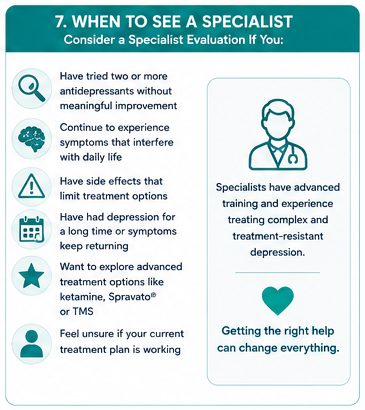
If you have tried two or more antidepressants without meaningful improvement—or if depression continues to interfere with work, relationships, or daily life—it may be time to consult a specialist experienced in treatment-resistant depression.
In New York, many patients are referred for advanced evaluation after traditional approaches have not provided sufficient relief. Depending on your medical history and symptoms, a specialist may discuss therapies such as ketamine infusions for depression, Spravato® (esketamine), transcranial magnetic stimulation (TMS), medication optimization, or other evidence-based treatment options.
The most important takeaway is that persistent symptoms do not mean you've run out of options. Treatment-resistant depression is an area of active medical research, and today's specialists have more tools available than they did even a decade ago.
Why Don't Antidepressants Work for Everyone?
Quick Answer
Antidepressants do not work for everyone because depression is a complex condition involving multiple biological systems—not just serotonin. While traditional antidepressants are effective for many people, others may have depression influenced by glutamate signaling, neuroplasticity, inflammation, genetics, chronic stress, or coexisting medical conditions. This is one reason why treatments such as ketamine infusions and Spravato® have become important options for people with treatment-resistant depression.
For decades, depression was commonly explained as a "chemical imbalance" caused by low serotonin levels. While serotonin remains an important neurotransmitter involved in mood regulation, scientists now understand that the biology of depression is considerably more complex.
Depression affects communication across multiple brain networks responsible for mood, memory, motivation, decision-making, learning, emotional regulation, and stress response. Rather than a single biological cause, depression appears to develop through a combination of genetic, environmental, psychological, and neurological factors that vary from person to person.
This growing understanding has fundamentally changed how psychiatrists evaluate patients whose symptoms persist despite standard antidepressant treatment.
Depression Is More Than Serotonin
Traditional antidepressants—including selective serotonin reuptake inhibitors (SSRIs) and serotonin-norepinephrine reuptake inhibitors (SNRIs)—primarily work by increasing the availability of serotonin and, in some cases, norepinephrine within the brain.
For many individuals, these medications can significantly reduce symptoms of depression. However, research has shown that a meaningful percentage of patients experience only partial improvement or no improvement at all.
Why?
Because serotonin represents only one part of a much larger system.
Modern neuroscience has identified additional biological processes involved in depression, including:
- Glutamate signaling
- Neuroplasticity
- Inflammatory pathways
- Stress hormone regulation
- Brain network connectivity
- Genetic differences affecting medication metabolism
- Immune system activation
- Sleep and circadian rhythm disruption
These discoveries help explain why two people with similar symptoms may respond very differently to the same medication.
The Role of Glutamate
One of the most important discoveries in depression research over the past two decades involves a neurotransmitter called glutamate.
Unlike serotonin, which primarily influences mood over time, glutamate plays a critical role in how brain cells communicate, form new connections, learn, adapt, and recover from stress.
Researchers now believe that chronic depression may reduce the brain's ability to create and strengthen these neural connections. In some individuals, this can contribute to persistent symptoms despite treatment with conventional antidepressants.
Ketamine and esketamine (Spravato®) work differently from SSRIs because they target glutamate pathways rather than serotonin alone. By influencing NMDA receptors and promoting glutamate activity, these therapies appear to support neuroplasticity—the brain's ability to reorganize and form new neural connections.
Although scientists continue to study the exact mechanisms involved, this difference helps explain why some patients report improvement within hours or days rather than waiting several weeks for traditional antidepressants to take effect.
Recent peer-reviewed research published in the National Library of Medicine has continued to strengthen the evidence supporting glutamate-based therapies for treatment-resistant depression, particularly when conventional medications have been unsuccessful.

Neuroplasticity: The Brain's Ability to Adapt
Another important concept is neuroplasticity.
Neuroplasticity refers to the brain's ability to reorganize itself by creating new neural pathways throughout life.
Healthy neuroplasticity allows us to:
- Learn new skills
- Form memories
- Recover from injury
- Adapt to stress
- Build emotional resilience
Chronic depression may reduce this flexibility, making it more difficult for the brain to recover from prolonged emotional stress.
One reason ketamine has attracted so much scientific attention is its potential to rapidly enhance synaptic connections and promote neuroplasticity. While researchers continue to investigate these effects, growing evidence suggests that improving neural connectivity may play an important role in reducing depressive symptoms for some patients.
Genetics May Influence Medication Response
Another reason antidepressants may not work as expected involves genetics.
Every person metabolizes medications differently.
Some individuals break medications down so quickly that therapeutic drug levels are difficult to maintain. Others metabolize medications more slowly, increasing the likelihood of side effects before meaningful symptom improvement occurs.
Certain genetic variations may also influence:
- Drug absorption
- Drug metabolism
- Drug elimination
- Receptor sensitivity
- Overall medication response
In some situations, healthcare providers may recommend pharmacogenomic testing to better understand how an individual processes certain psychiatric medications. While genetic testing cannot determine which treatment will definitely work, it may provide useful information when selecting or adjusting medications.
Medical Conditions Can Mimic or Worsen Depression
Before diagnosing treatment-resistant depression, clinicians often evaluate for underlying medical conditions that may contribute to persistent symptoms.
Examples include:
- Thyroid disorders
- Vitamin B12 deficiency
- Vitamin D deficiency
- Iron deficiency
- Obstructive sleep apnea
- Chronic pain disorders
- Autoimmune diseases
- Neurological disorders
- Hormonal changes
- Substance use disorders
Treating these conditions may improve depressive symptoms or increase the effectiveness of psychiatric treatment.
This comprehensive evaluation is one reason many patients benefit from seeing specialists experienced in complex mood disorders rather than assuming another antidepressant is the only option.
Inflammation and Depression
One of the most rapidly evolving areas of depression research involves inflammation.
Scientists have observed that some individuals with depression have elevated inflammatory markers, suggesting that the immune system may influence mood regulation in ways that were not fully understood only a decade ago.
Although inflammation is unlikely to explain every case of depression, researchers continue investigating how inflammatory pathways interact with stress hormones, neurotransmitters, and brain function.
This research remains active, but it highlights an important point:
Depression is not a single disease with a single biological cause.
Instead, it is a complex condition involving multiple interacting systems.
Why Personalized Treatment Matters
Because depression develops differently in every individual, there is no single treatment that works for everyone.
A treatment plan should consider factors such as:
- Previous medication response
- Current symptoms
- Coexisting anxiety
- PTSD
- Chronic pain
- Sleep quality
- Medical history
- Lifestyle factors
- Personal treatment goals
- Insurance coverage
- Patient preferences
This individualized approach has become increasingly important as more evidence-based treatment options become available.
For some patients, optimizing an antidepressant regimen and continuing psychotherapy remains the best course of action.
For others, therapies such as ketamine infusions, Spravato®, TMS, or ECT may offer meaningful improvement after conventional medications have not provided sufficient relief.
Research Continues to Expand Treatment Options
The outlook for people living with treatment-resistant depression has changed significantly over the past twenty years.
Researchers at institutions including the National Institute of Mental Health (NIMH), Johns Hopkins Medicine, and academic medical centers across the United States continue to study new therapies aimed at improving outcomes for patients who have not responded to traditional treatments.
At the same time, the U.S. Food and Drug Administration (FDA) has approved new treatment approaches such as Spravato® for eligible adults with treatment-resistant depression, reflecting the growing recognition that depression often requires individualized care rather than a one-size-fits-all approach.
While no treatment can guarantee success for every patient, today's specialists have considerably more evidence-based options available than they did even a decade ago.
Looking Ahead: Choosing the Right Treatment Path
Understanding why antidepressants sometimes fail naturally leads to the next question:
What treatments are available when depression doesn't improve?
Fortunately, advances in psychiatric medicine have expanded the range of evidence-based options. In the next section, we'll explore how ketamine infusions, Spravato®, TMS, ECT, psychotherapy, and medication optimization are used to treat treatment-resistant depression, what current research says about each approach, and how specialists work with patients to determine which treatment may be the best fit.
Evidence-Based Treatment Options for Treatment-Resistant Depression
Quick Answer
There is no single "best" treatment for treatment-resistant depression. The most appropriate option depends on your symptoms, previous treatment history, overall health, personal preferences, and recommendations from your healthcare provider. Evidence-based treatments may include ketamine infusions, Spravato® (esketamine), transcranial magnetic stimulation (TMS), electroconvulsive therapy (ECT), psychotherapy, medication optimization, or a combination of these approaches.
Advances in psychiatric medicine have significantly expanded the number of effective treatment options available. For many people in New York who have not improved with conventional antidepressants, these therapies provide renewed hope and a path toward recovery.
Ketamine Infusion Therapy
Among the most significant advances in the treatment of depression has been the use of intravenous ketamine therapy. Originally developed as an anesthetic, ketamine has been studied extensively over the past two decades for its ability to rapidly reduce symptoms of treatment-resistant depression.
Unlike traditional antidepressants, ketamine works primarily by influencing the brain's glutamate system, which plays an important role in learning, memory, and neuroplasticity. Researchers believe this mechanism may help the brain form and strengthen new neural connections, potentially improving communication between regions involved in mood regulation.
One of ketamine's most notable characteristics is the speed at which some patients begin noticing improvement. While conventional antidepressants often require four to eight weeks before their full effects become apparent, many patients report meaningful symptom improvement within hours or days following treatment. Individual experiences vary, and ketamine is not effective for everyone, but this relatively rapid onset has made it an important option for carefully selected patients.
At NY Ketamine Infusions, treatment begins with a comprehensive medical evaluation. During the consultation, physicians review previous medications, psychiatric history, medical conditions, and treatment goals to determine whether ketamine therapy is appropriate.
For most patients, the initial course consists of six intravenous infusions over approximately two to three weeks. Each treatment is performed in a quiet, comfortable medical environment with continuous monitoring by trained healthcare professionals. Patients remain awake throughout the infusion, and vital signs are observed to ensure safety and comfort.
Following the initial series, some individuals experience sustained improvement, while others benefit from periodic maintenance infusions. Maintenance schedules are individualized based on symptom recurrence, treatment response, and physician recommendations.
Clinical studies continue to demonstrate promising outcomes for appropriately selected patients, and ketamine has become one of the most extensively researched advanced therapies for treatment-resistant depression. Learn more about why intravenous ketamine is used in a medically supervised setting.
How quickly can ketamine therapy work?
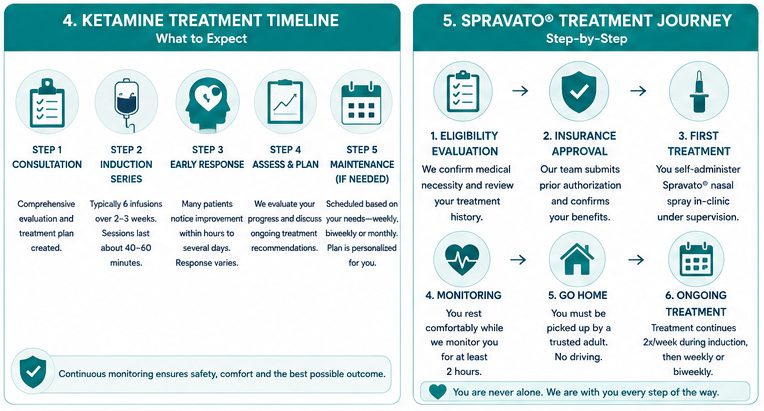
Many patients begin noticing improvement within several hours to a few days after treatment, although responses vary. Some individuals experience gradual improvement over multiple sessions, while others require maintenance therapy to sustain symptom relief.
Spravato® (Esketamine)
Spravato® is the first FDA-approved nasal spray specifically indicated for eligible adults with treatment-resistant depression when used together with an oral antidepressant. Approved by the U.S. Food and Drug Administration in 2019, Spravato® represents another important advancement in depression treatment.
Esketamine is closely related to ketamine but differs in formulation, administration, and regulatory approval. Rather than receiving medication through an intravenous infusion, patients self-administer the nasal spray under the supervision of certified healthcare professionals.
Because Spravato® can temporarily affect blood pressure, alertness, and perception, treatment is provided through the FDA's Risk Evaluation and Mitigation Strategy (REMS) Program. Patients remain under medical observation for at least two hours following each treatment before returning home with a responsible adult.
One of the advantages of Spravato® is its potential insurance accessibility for eligible patients. Because it carries FDA approval for treatment-resistant depression, many commercial insurance plans, Medicare plans, and certain Medicaid programs may provide coverage for eligible patients. Coverage requirements differ among insurers, and prior authorization is often necessary.
At NY Ketamine Infusions, our team assists eligible patients with SPRAVATO® insurance verification and prior authorization whenever applicable. This helps simplify the treatment process and allows patients to better understand their expected costs before beginning therapy.
Current research suggests that both ketamine infusions and Spravato® can be effective options for treatment-resistant depression. The choice between them depends on multiple factors, including medical history, insurance coverage, physician recommendations, patient preference, and clinical goals. Our guide to SPRAVATO® versus IV ketamine explains the practical differences in greater detail.
Is Spravato® the same as ketamine?
No. Spravato® contains esketamine, a molecule related to ketamine, and is administered as a nasal spray under FDA-approved protocols. Intravenous ketamine is administered by infusion and is used off-label for treatment-resistant depression by qualified physicians. Both therapies target glutamate pathways but differ in formulation, administration, and regulatory status.
Transcranial Magnetic Stimulation (TMS)
Transcranial magnetic stimulation, commonly known as TMS, is another evidence-based treatment for individuals whose depression has not improved with medication alone.
TMS uses carefully controlled magnetic pulses to stimulate specific areas of the brain involved in mood regulation. Unlike ketamine or Spravato®, TMS does not involve medication or sedation. Patients remain awake throughout each treatment session and can typically resume normal daily activities immediately afterward.
Treatment generally involves five sessions per week over four to six weeks, although schedules vary depending on the protocol used and individual response.
Many patients appreciate that TMS is non-invasive and avoids many of the systemic side effects associated with medication. However, because improvement usually develops gradually over several weeks, it may not provide the rapid symptom relief that some individuals seek.
Does TMS work for treatment-resistant depression?
Yes. TMS is FDA-cleared for certain patients with major depressive disorder who have not responded adequately to antidepressant medication. Many people experience significant improvement, although treatment typically requires several weeks of regularly scheduled sessions.
Electroconvulsive Therapy (ECT)
Although electroconvulsive therapy has been available for decades, it remains one of the most effective treatments for severe depression, particularly when rapid intervention is medically necessary.
Modern ECT differs substantially from historical portrayals in popular culture. Today's procedures are performed under general anesthesia with carefully controlled electrical stimulation and continuous monitoring by experienced medical teams.
ECT may be considered for patients experiencing:
- Severe treatment-resistant depression
- Depression with psychotic features
- Catatonia
- Significant suicidal risk requiring rapid symptom improvement
- Depression that has not responded to multiple other therapies
While temporary memory changes may occur, advances in treatment techniques have improved the safety and tolerability of modern ECT.
Psychotherapy Remains an Essential Part of Care
Even when medications have not been successful, psychotherapy continues to play an important role in recovery.
Evidence-based approaches such as:
- Cognitive Behavioral Therapy (CBT)
- Dialectical Behavior Therapy (DBT)
- Acceptance and Commitment Therapy (ACT)
- Mindfulness-Based Cognitive Therapy (MBCT)
- Interpersonal Therapy (IPT)
can help patients develop healthier coping strategies, improve emotional regulation, strengthen relationships, and reduce relapse risk.
Many specialists recommend combining psychotherapy with advanced medical treatments rather than viewing them as competing approaches.
Medication Optimization
Sometimes the most effective treatment is not an entirely new therapy but a careful reassessment of existing medications.
Psychiatrists may consider:
- Adjusting dosage
- Changing medication classes
- Combining medications
- Treating coexisting anxiety
- Addressing sleep disorders
- Evaluating thyroid function
- Managing chronic pain
- Reviewing potential drug interactions
This individualized approach often identifies opportunities that were previously overlooked.
Comparing Treatment Options
| Treatment | How It Is Provided | Typical Treatment Pattern | Insurance Considerations | Important Consideration |
|---|---|---|---|---|
| IV Ketamine | Intravenous infusion in a monitored clinical setting | An initial series followed by an individualized maintenance plan when appropriate | Often self-pay for depression because use is off-label; some plans may reimburse portions of care | Allows precise, physician-directed dosing and may work relatively quickly for some patients |
| SPRAVATO® | Self-administered nasal spray under supervision at a REMS-certified treatment center | Structured induction and maintenance schedule | Often covered for eligible patients when plan and medical-necessity requirements are met | Requires at least two hours of observation after each treatment |
| TMS | Non-invasive magnetic stimulation delivered during outpatient sessions | Frequently provided multiple days per week over several weeks | Often covered when clinical criteria are satisfied | No medication or anesthesia is required, but the schedule can be time intensive |
| ECT | Procedure performed under anesthesia by a specialized medical team | An individualized acute course, sometimes followed by maintenance treatment | Often covered when medically necessary | May be considered for severe depression, psychotic depression, catatonia, or urgent clinical situations |
These options are not interchangeable, and no table can determine which treatment is appropriate for a particular patient. A qualified clinician should review diagnosis, medical history, previous treatment response, current medications, urgency, risks, practical scheduling needs, and personal preferences.
Choosing the Right Treatment
There is no universal treatment that works for everyone with treatment-resistant depression. A comprehensive evaluation considers the whole person—not just a diagnosis.
Factors that influence treatment recommendations include:
- Previous antidepressant response
- Severity and duration of symptoms
- Anxiety, PTSD, or other coexisting conditions
- Medical history
- Current medications
- Lifestyle and work responsibilities
- Insurance coverage
- Personal preferences
- Treatment goals
For many people throughout New York City, Manhattan, Brooklyn, Queens, the Bronx, Staten Island, Long Island, Nassau County, and Suffolk County, receiving care from clinicians experienced in advanced depression therapies can make an important difference. Rather than simply trying another antidepressant, a comprehensive evaluation may identify evidence-based options that better align with an individual's unique clinical picture.
Finding Specialized Treatment-Resistant Depression Care in New York
Quick Answer
If you've tried two or more antidepressants without meaningful improvement, it may be time to consult a specialist experienced in treatment-resistant depression. New York offers access to advanced treatments such as ketamine infusions, Spravato® (esketamine), TMS, and comprehensive psychiatric evaluations. Seeking a second opinion or specialty consultation does not mean previous treatment failed—it simply means you're exploring additional evidence-based options.
Living with depression can be difficult anywhere, but managing treatment-resistant depression while balancing the demands of life in New York City presents unique challenges. Whether you're commuting into Manhattan each day, raising a family on Long Island, attending school in Brooklyn, or working long hours in Queens, persistent depression can affect every aspect of daily life.
One of the advantages of living in the New York metropolitan area is access to highly specialized mental health services. In recent years, more psychiatrists and specialty clinics have begun offering advanced therapies designed specifically for patients whose depression has not responded to conventional treatment.
Rather than continuing to cycle through medication after medication, many patients now receive comprehensive evaluations that consider their full medical history, previous treatments, lifestyle, and personal goals before recommending the next step.
This broader evaluation helps ensure that persistent symptoms are not being driven by another underlying condition and allows clinicians to develop a more personalized treatment strategy.
According to the National Institute of Mental Health (NIMH), depression is a complex illness with biological, psychological, and environmental contributors. A comprehensive assessment is often the foundation of successful long-term treatment.
Access to Advanced Depression Treatment Throughout New York
Patients seeking treatment-resistant depression care frequently travel from across the region to access specialty services.
At NY Ketamine Infusions, patients commonly visit from:
- Manhattan
- Brooklyn
- Queens
- The Bronx
- Staten Island
- Long Island
- Nassau County
- Suffolk County
- Westchester County
- Rockland County
- Orange County
- Northern New Jersey
- Fairfield County, Connecticut
- Westchester suburbs
Many individuals choose specialty clinics because they provide therapies that may not be available in every psychiatric office, including intravenous ketamine infusions and Spravato® treatment under physician supervision.
Convenient access to locations in Lower Manhattan and Melville, Long Island, allows many patients to receive care closer to home while remaining connected with their referring psychiatrist, therapist, or primary care provider.
Coordinating Care With Your Existing Mental Health Providers
One common concern patients have is whether beginning ketamine therapy or Spravato® means they need to stop seeing their current psychiatrist or therapist.
In most cases, the answer is no.
Treatment-resistant depression is often managed through a collaborative approach.
Depending on your individual circumstances, your care team may include:
- Your primary care physician
- Psychiatrist
- Psychologist
- Licensed therapist
- Ketamine physician
- Spravato® treatment provider
- Family members or caregivers
Communication among providers helps ensure medications remain appropriate, progress is monitored, and treatment decisions are made collaboratively.
Rather than replacing existing mental health care, advanced therapies often become one component of a broader treatment plan.
When Should You Consider a Second Opinion?
Many patients hesitate to seek another evaluation because they worry it reflects poorly on their current physician.
In reality, second opinions are common in medicine.
If your depression continues despite multiple treatment attempts, another specialist may recommend therapies that simply were not appropriate earlier in your treatment journey.
You may benefit from a second opinion if:
- Two or more antidepressants have not helped.
- Side effects have limited treatment.
- Depression continues to interfere with work or relationships.
- Symptoms continue returning after temporary improvement.
- You're interested in learning whether ketamine, Spravato®, or TMS may be appropriate.
- You want a comprehensive review of previous treatments.
Seeking another opinion is not about starting over.
It's about making sure every evidence-based option has been considered.
What to Expect During an Initial Evaluation
Although every practice has its own process, most specialty evaluations include:
- A detailed review of previous medications
- Current symptoms
- Psychiatric history
- Medical history
- Current medications
- Previous psychotherapy
- Family history
- Lifestyle factors
- Treatment goals
- Questions about work, school, and daily functioning
This conversation allows our experienced medical team to determine whether advanced therapies are appropriate and whether additional testing or referrals may be beneficial before beginning treatment.
Before a treatment consultation, patients are encouraged to bring:
- A list of previous antidepressants
- Current medications
- Insurance information
- Questions they would like answered
- Contact information for their psychiatrist or therapist, if applicable
A Personalized Approach to Recovery
One of the most important lessons learned from decades of depression research is that there is no single treatment pathway that works for everyone. Some patients experience meaningful improvement with medication adjustments alone. Others benefit from psychotherapy. Some respond best to ketamine therapy. Others are excellent candidates for Spravato®, TMS, or another evidence-based approach. The goal of a comprehensive evaluation is not simply to recommend a treatment. It is to identify the treatment most likely to help you based on your medical history, previous experiences, and personal goals.
For people throughout New York City, Long Island, and the surrounding region, access to specialized depression care means there are now more options than ever before.
Insurance Coverage for Treatment-Resistant Depression in New York
Quick Answer
Insurance coverage for treatment-resistant depression depends on the type of treatment, your diagnosis, and your individual health plan. FDA-approved therapies such as Spravato® (esketamine) are often covered for eligible patients when medical necessity criteria are met. Coverage for intravenous ketamine infusions varies among insurance providers because ketamine is commonly prescribed off-label for depression. Before beginning treatment, it's important to verify your benefits and discuss your options with your healthcare provider.
For many people living with treatment-resistant depression, one of the first questions after learning about advanced treatment options is whether insurance will help cover the cost of care.
Fortunately, insurance coverage for depression treatment has expanded considerably over the past several years, particularly as more evidence has become available supporting advanced therapies for individuals who have not responded to conventional antidepressants.
Although every insurance plan is different, understanding how coverage typically works can help you make informed decisions and avoid unexpected expenses.
Does insurance cover treatment-resistant depression treatment?
Insurance coverage depends on the specific therapy and health plan. FDA-approved Spravato® is covered by many commercial insurance plans and Medicare for eligible patients, while coverage for intravenous ketamine therapy varies. Many specialty clinics assist patients with benefits verification before treatment begins.
Spravato® and Insurance Coverage
One reason Spravato® has become an important treatment option is that it is FDA approved for eligible adults with treatment-resistant depression when used in combination with an oral antidepressant.
Because of this approval, many insurance providers recognize Spravato® as a covered medical benefit for qualifying patients.
Coverage frequently depends on documentation showing that:
- Major depressive disorder has been diagnosed.
- At least two antidepressants have not provided adequate improvement.
- Previous treatments were taken appropriately.
- Medical necessity criteria have been met.
- Treatment will be provided through an authorized REMS-certified clinic.
Depending on your insurance provider, prior authorization may be required before treatment begins.
Many specialty clinics—including NY Ketamine Infusions—assist patients by submitting the necessary clinical documentation, verifying benefits, and communicating with insurance companies throughout the approval process.
Is Spravato® covered by insurance?
Often, yes. Because Spravato® is FDA approved for eligible adults with treatment-resistant depression, many commercial insurance plans and Medicare plans provide coverage after medical necessity requirements are met. Coverage varies by insurer and individual policy.
Are Ketamine Infusions Covered by Insurance?
Coverage for intravenous ketamine infusions differs from Spravato® because ketamine is commonly prescribed off-label for treatment-resistant depression.
"Off-label" simply means that a medication approved by the FDA for one purpose is being used by physicians for another condition based on available scientific evidence and clinical judgment. Off-label prescribing is common throughout medicine and is supported by extensive research in many specialties.
Because insurance policies vary, some plans may:
- Provide partial reimbursement
- Cover portions of the evaluation
- Cover physician visits but not infusion costs
- Decline coverage for the infusion itself
Patients should never assume coverage—or lack of coverage—without verifying benefits directly with their insurance company.
At NY Ketamine Infusions, patients are encouraged to discuss financial considerations during their consultation so they understand available treatment options before beginning care. Ask about CareCredit financing and current treatment fees. Qualified patients may be able to use flexible monthly payment options to help manage eligible out-of-pocket treatment costs.
Does insurance cover ketamine infusions for depression?
Coverage varies. Some insurance plans reimburse portions of treatment, while others consider intravenous ketamine therapy an out-of-pocket service. Coverage depends on your individual insurance plan and current policy guidelines. However, flexible financing may be available for qualifying patients. Contact us to learn more.
Common Insurance Plans Accepted for Depression Treatment
Patients frequently ask whether specific insurance providers cover advanced depression therapies.
Depending on eligibility and the treatment being recommended, patients may have benefits through carriers such as:
Aetna
Anthem / Empire BlueCross BlueShield
BCBS FEP
Carelon Behavioral Health
Cigna / Evernorth
EmblemHealth / GHI
Fidelis Care NY
Highmark BCBS NY
Humana
Medicaid NY
Medicare
MVP Health Care
Optum
Oxford Health Plans
The Empire Plan
Tricare
UnitedHealthcare
and additional plans subject to eligibility
View SPRAVATO® Insurance Coverage
Because insurance policies change periodically, patients should always review the current SPRAVATO® insurance coverage information and verify benefits before scheduling treatment.
Prior Authorization: What Does It Mean?
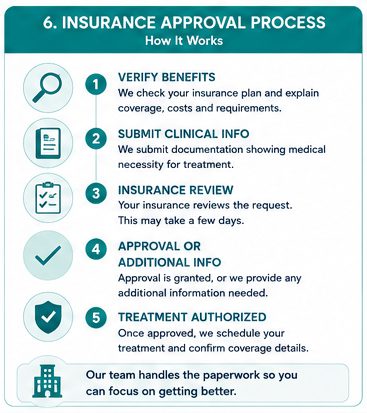
Some advanced depression treatments require prior authorization.
This is simply a process where your insurance company reviews medical information before approving coverage.
Prior authorization may require documentation including:
- Previous antidepressant history
- Psychiatric diagnosis
- Clinical notes
- Current medications
- Physician recommendations
- Previous psychotherapy
- Severity of symptoms
Although this process may seem frustrating, it helps insurance companies determine whether treatment meets established medical necessity guidelines.
Experienced treatment centers often help patients navigate this paperwork, reducing delays and improving communication with insurance providers.
Flexible Payment Options
Even when insurance does not fully cover treatment, many patients still pursue advanced therapies because untreated depression can have significant personal, professional, and financial consequences.
Patients often ask about:
- Financing options
- Flexible payment plans
- Health Savings Accounts (HSA)
- Flexible Spending Accounts (FSA)
- Out-of-network reimbursement
- Medical financing programs
If you're considering ketamine therapy or Spravato®, reviewing our fees, insurance, and financing information before your consultation can help you understand the potential cost of care.
Ask About CareCredit Financing
Flexible monthly payment options may help qualified patients manage out-of-pocket treatment costs.
Discuss Payment OptionsWhy Insurance Shouldn't Be the Only Factor
Cost is understandably an important consideration, but it should not be the only factor when choosing treatment.
Patients should also consider:
- Clinical experience
- Physician qualifications
- Safety protocols
- Comprehensive evaluation
- Personalized treatment planning
- Follow-up care
- Communication with existing mental health providers
- Patient education
- Long-term treatment strategy
The goal is to receive evidence-based care that is appropriate for your individual circumstances—not simply the least expensive option.
Frequently Asked Questions About Treatment-Resistant Depression
Quick Answer
Many people diagnosed with treatment-resistant depression have similar questions about symptoms, treatment options, insurance, and recovery. The answers below are based on current clinical guidance from organizations including Johns Hopkins Medicine, the Cleveland Clinic, the National Institute of Mental Health (NIMH), the U.S. Food and Drug Administration (FDA), and recent peer-reviewed research.
What Is the Newest Treatment for Treatment-Resistant Depression?
Recent advances include ketamine-based therapies and Spravato® (esketamine), which targets glutamate pathways involved in mood regulation. These therapies represent a different approach from traditional antidepressants and may be appropriate for certain individuals after careful evaluation.
Can Treatment-Resistant Depression Improve?
Yes. A diagnosis of treatment-resistant depression does not mean recovery is impossible. Many patients experience meaningful improvement after changing treatment strategies or receiving therapies that work through different biological mechanisms.
How Many Antidepressants Must Fail Before Depression Is Considered Treatment-Resistant?
Although individual circumstances vary, treatment-resistant depression is generally diagnosed after two adequate antidepressant trials have failed to produce sufficient improvement.
Is Spravato® Better Than Ketamine?
Neither treatment is universally better. Both have supporting clinical evidence, but the most appropriate option depends on factors such as diagnosis, medical history, insurance coverage, previous treatment response, and physician recommendations.
How Long Does Ketamine Therapy Last?
Responses vary from person to person. Some patients experience improvement for weeks or months following an initial treatment series, while others benefit from individualized maintenance treatments.
Can I Continue Taking My Antidepressants During Ketamine Therapy?
Many patients continue their prescribed antidepressants while receiving ketamine therapy. Medication changes should always be made under the supervision of your treating physician or psychiatrist.
Does Medicare Cover Spravato®?
Many Medicare plans provide coverage for eligible patients when medical necessity criteria are met, although benefits and prior authorization requirements vary.
What Happens If Ketamine Doesn't Work?
If ketamine therapy does not provide sufficient improvement, other evidence-based options remain available, including Spravato®, TMS, ECT, medication optimization, psychotherapy, or additional specialty evaluation. Treatment-resistant depression often requires a personalized, stepwise approach rather than a single solution.
Are There Specialists for Treatment-Resistant Depression in New York?
Yes. New York Ketamine Infusions in New York City and Long Island has specialty clinics that offer advanced evaluations and evidence-based therapies for individuals whose depression has not improved with conventional treatment. NY Ketamine Infusions provides specialty care at 160 Broadway, 16th Floor, New York, NY 10038 (917-261-7370) and 150 Broadhollow Road, Suite 103, Melville, NY 11747 (631-629-4626).
Can Anxiety and PTSD Affect Treatment-Resistant Depression?
Yes. Anxiety disorders, post-traumatic stress disorder (PTSD), obsessive-compulsive disorder (OCD), chronic pain, and other conditions commonly occur alongside depression. Identifying and treating these coexisting conditions is an important part of developing an effective, individualized treatment plan.
Additional Patient Resources
- 988 Suicide & Crisis Lifeline
- National Alliance on Mental Illness (NAMI)
- Depression and Bipolar Support Alliance (DBSA)
- Mental Health America (MHA)
Our Editorial Standards & Medical Review Process
This article was written to help patients better understand treatment-resistant depression and available treatment options. Learn more about the physicians and clinical team at NY Ketamine Infusions. Content is based on guidance from nationally recognized medical organizations, peer-reviewed research, and current clinical practice. It is reviewed regularly to reflect new evidence and updated recommendations. This article is intended for educational purposes only and should not replace personalized medical advice from a qualified healthcare professional.
References
The following organizations and peer-reviewed publications were referenced in the preparation of this article and provide additional evidence-based information about treatment-resistant depression, ketamine therapy, Spravato® (esketamine), and related mental health conditions.
Academic Medical Centers
Johns Hopkins Medicine. Esketamine for Treatment-Resistant Depression.
https://www.hopkinsmedicine.org/health/treatment-tests-and-therapies/esketamine-for-treatment-resistant-depression
Accessed July 2026.
Cleveland Clinic. The Essentials on Esketamine for Treatment-Resistant Depression.
https://consultqd.clevelandclinic.org/the-essentials-on-esketamine-for-treatment-resistant-depression
Accessed July 2026.
U.S. Government & Federal Agencies
National Institute of Mental Health (NIMH). Depression.
https://www.nimh.nih.gov/health/topics/depression
National Institute of Mental Health (NIMH). Major Depression.
https://www.nimh.nih.gov/health/statistics/major-depression
U.S. Food & Drug Administration (FDA). SPRAVATO® (esketamine) Nasal Spray – Prescribing Information.
https://www.accessdata.fda.gov/drugsatfda_docs/label/2025/211243s016lbl.pdf
Accessed July 2026.
U.S. Food & Drug Administration (FDA). Risk Evaluation and Mitigation Strategy (REMS) Program for SPRAVATO®.
https://www.spravatorems.com/
Professional Organizations
American Psychiatric Association (APA). Clinical Practice Guideline for the Treatment of Depression.
https://www.psychiatry.org/patients-families/depression
American Psychiatric Association. Practice Guideline for the Treatment of Patients With Major Depressive Disorder.
https://psychiatryonline.org
Peer-Reviewed Medical Literature
Bahji A, Vazquez GH, Zarate CA Jr. Comparative efficacy of racemic ketamine and esketamine for depression: A systematic review and meta-analysis. Journal of Affective Disorders. 2021.
Bahr R, Lopez A, Rey JA. Intranasal Esketamine (Spravato™) for Use in Treatment-Resistant Depression in Conjunction With an Oral Antidepressant. P&T. 2019;44(6):340-375.
https://pmc.ncbi.nlm.nih.gov/articles/PMC6534172/
Recent Review of Treatment-Resistant Depression. National Library of Medicine / PubMed Central.
https://pmc.ncbi.nlm.nih.gov/articles/PMC10503923/
Daly EJ, Trivedi MH, Janik A, et al. Efficacy of Esketamine Nasal Spray Plus Oral Antidepressant in Patients With Treatment-Resistant Depression. JAMA Psychiatry. 2019.
Popova V, Daly EJ, Trivedi M, et al. Efficacy and Safety of Flexibly Dosed Esketamine Nasal Spray Combined With a Newly Initiated Oral Antidepressant in Treatment-Resistant Depression. American Journal of Psychiatry. 2019.
Wilkinson ST, Ballard ED, Bloch MH, et al. The Effect of a Single Dose of Intravenous Ketamine on Suicidal Ideation: A Systematic Review and Individual Participant Data Meta-Analysis. American Journal of Psychiatry. 2018.
Zarate CA Jr, Singh JB, Carlson PJ, et al. A Randomized Trial of an N-Methyl-D-Aspartate Antagonist in Treatment-Resistant Major Depression. Archives of General Psychiatry. 2006.
Medical disclaimer: This page is for educational purposes and does not replace diagnosis, treatment, or advice from a qualified healthcare professional. Individual eligibility, treatment response, risks, and insurance coverage vary.
Explore Your Next Step
NY Ketamine Infusions provides physician-guided evaluations for treatment-resistant depression at locations in Lower Manhattan and Melville, Long Island.