
Bipolar Disorder Symptoms, Diagnosis, Treatment Options, and Hope for Recovery in New York
Bipolar disorder is a complex mental health condition that requires treatment and affects a significant number of New Yorkers. According to the New York City Department of Health’s State of Mental Health of New Yorkers report, approximately 3% of NYC adults have been diagnosed by a health care professional with bipolar disorder, mania, or manic depression—an estimated 181,000 adults citywide. It involves recurring episodes of depression and periods of elevated mood known as mania or hypomania that can affect thinking, sleep, energy, relationships, judgment, and daily functioning. Although it is generally considered a lifelong condition, modern treatment allows many people to achieve long periods of stability and live meaningful, productive lives.
Many people first seek help during depression and are initially diagnosed with major depressive disorder because previous hypomanic or manic episodes were overlooked. Understanding bipolar disorder is the first step toward receiving an accurate diagnosis and appropriate care.
Understanding Bipolar I and Bipolar II
Bipolar I Disorder includes at least one manic episode. Bipolar II Disorder includes major depressive episodes together with hypomania, but not full mania. Bipolar II is not simply a milder illness because depressive episodes are often longer and more disabling.
- Mania: elevated mood, little need for sleep, racing thoughts, impulsive behavior, poor judgment.
- Hypomania: increased energy, productivity, confidence, and reduced need for sleep with less impairment.
- Both conditions benefit from individualized treatment and ongoing psychiatric care.
What Bipolar Disorder Feels Like
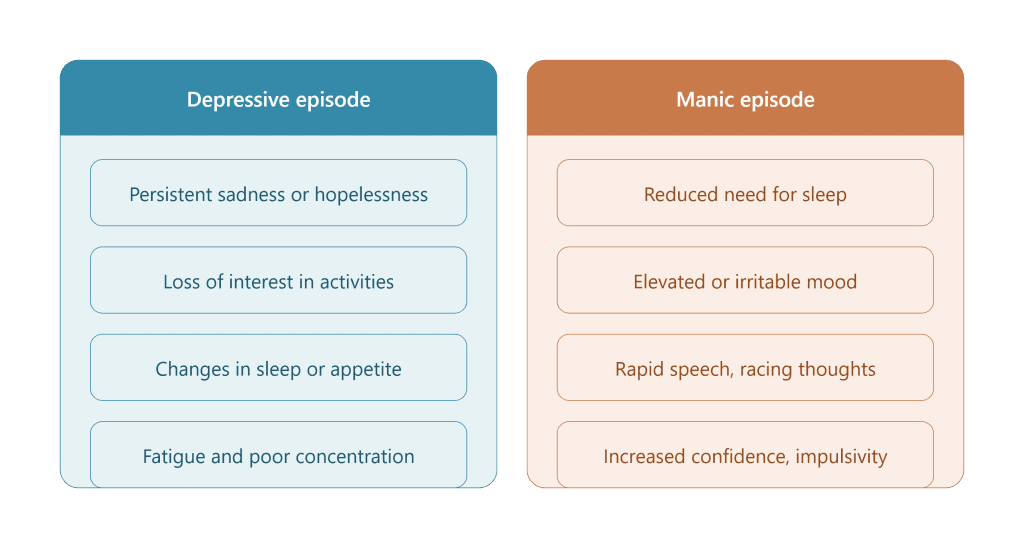
Bipolar disorder affects much more than mood. During depression, people often describe exhaustion, hopelessness, loss of motivation, poor concentration, and emotional numbness. During mania or hypomania, they may experience increased energy, rapid speech, racing thoughts, unusual confidence, decreased need for sleep, and impulsive decision-making. Between episodes, many people return to their usual level of functioning.
Common Signs and Symptoms
- Persistent sadness or hopelessness
- Loss of interest in enjoyable activities
- Changes in sleep or appetite
- Fatigue and poor concentration
- Reduced need for sleep
- Elevated or irritable mood
- Rapid speech and racing thoughts
- Increased confidence and impulsivity
What Causes Bipolar Disorder?
Current research suggests bipolar disorder develops through a combination of genetics, brain biology, neurotransmitter activity, circadian rhythm disruption, environmental influences, and stressful life events. Family history increases risk but does not determine whether someone will develop the condition.
Common Triggers
- Sleep deprivation
- Stress
- Changes in routine
- Alcohol or recreational drugs
- Medication changes
- Physical illness
- Seasonal changes
How Bipolar Disorder Is Diagnosed
There is no single laboratory test that diagnoses bipolar disorder. Diagnosis is based on a comprehensive psychiatric evaluation reviewing symptoms, mood history, family history, medical history, medications, sleep patterns, and daily functioning while considering other conditions that may produce similar symptoms.
Evidence-Based Treatment Options
Bipolar disorder treatment is individualized and commonly combines medication, psychotherapy, healthy lifestyle habits, education, and regular follow-up. Mood stabilizers and selected atypical antipsychotic medications remain important components of care for many patients.
Evidence-based psychotherapies such as Cognitive Behavioral Therapy, Interpersonal and Social Rhythm Therapy, Family-Focused Therapy, and psychoeducation help patients recognize symptoms, maintain routines, and reduce relapse risk.
Consistent sleep, exercise, stress management, and medication adherence support long-term emotional stability.
Ketamine Therapy for Treatment-Resistant Bipolar Depression
Some individuals continue experiencing significant depressive symptoms despite evidence-based treatment. For carefully selected patients, ketamine therapy has emerged as a promising option. Unlike traditional antidepressants, ketamine primarily affects the brain’s glutamate system and may produce rapid antidepressant effects.
Current research suggests ketamine may reduce depressive symptoms in some patients with treatment-resistant bipolar depression when delivered under experienced psychiatric supervision as part of a comprehensive treatment plan.
- Comprehensive psychiatric evaluation is essential.
- Ketamine is not a first-line treatment.
- Treatment should be coordinated with ongoing psychiatric care.
- Response varies between individuals.
Living Well With Bipolar Disorder
Many people with bipolar disorder lead healthy, productive lives. Recovery involves recognizing early warning signs, maintaining healthy routines, taking medications as prescribed, participating in therapy, and building a strong support network.
Supporting a Loved One
Education, empathy, and communication help families support recovery. Loved ones can encourage treatment, recognize early warning signs, and maintain healthy boundaries while also caring for their own well-being.
Bipolar Disorder Myths vs. Facts
- Myth: Bipolar disorder is just mood swings. Fact: It involves significant mood episodes affecting daily functioning.
- Myth: Mania is simply happiness. Fact: It can impair judgment and increase risky behavior.
- Myth: People with bipolar disorder cannot succeed. Fact: Many maintain successful careers and relationships.
- Myth: There is no hope. Fact: Modern treatments have dramatically improved outcomes.
The Future of Bipolar Disorder Care
Researchers continue investigating precision psychiatry, genetics, biomarkers, brain imaging, digital mental health technologies, artificial intelligence, and glutamate-based therapies. These advances aim to personalize treatment and improve long-term outcomes.
Key Takeaways
- Bipolar disorder is treatable.
- Early diagnosis improves outcomes.
- Treatment is individualized.
- Healthy routines and sleep are essential.
- Ketamine may help carefully selected patients with treatment-resistant bipolar depression.
Conclusion
A bipolar disorder diagnosis can feel overwhelming, but it is also the beginning of understanding the condition and finding effective treatment. With evidence-based care, education, healthy habits, and ongoing support, many people achieve long-term stability and fulfilling lives.
Frequently Asked Questions About Bipolar Disorder
What does bipolar disorder feel like?
Bipolar disorder can involve significant shifts in mood, energy, sleep, activity, and thinking. Depressive episodes may cause sadness, fatigue, loss of interest, and difficulty concentrating, while mania or hypomania may involve increased energy, reduced need for sleep, rapid thoughts, impulsivity, or unusually elevated or irritable moods. Experiences vary from person to person.
What is the difference between Bipolar I and Bipolar II?
Bipolar I disorder is defined by at least one manic episode, which may be severe enough to significantly impair daily functioning or require hospitalization. Bipolar II disorder involves episodes of major depression and hypomania, a less severe form of elevated mood than mania. Both conditions can significantly affect quality of life and require appropriate treatment.
Can someone have bipolar disorder without knowing it?
Yes. Bipolar disorder can sometimes go unrecognized, particularly when a person initially seeks treatment during a depressive episode. Hypomanic episodes may also be overlooked or interpreted as periods of increased productivity or energy. A comprehensive psychiatric evaluation can help distinguish bipolar disorder from unipolar depression and other conditions.
What can trigger bipolar mood episodes?
Potential triggers include disrupted sleep, significant stress, medication changes, substance use, illness, and major life changes. Triggers vary among individuals, and episodes can also occur without an obvious cause. Maintaining regular sleep and daily routines can be an important part of long-term bipolar disorder management.
How is bipolar disorder diagnosed?
Bipolar disorder is diagnosed through a comprehensive psychiatric evaluation. A clinician typically reviews current symptoms, previous episodes of depression, mania or hypomania, sleep patterns, medications, medical and family history, and changes in daily functioning. There is no single blood test or brain scan that can diagnose bipolar disorder.
Is bipolar disorder treatable?
Yes. Bipolar disorder is a treatable condition that is generally managed over the long term. Treatment may include mood-stabilizing medications, certain antipsychotic medications, psychotherapy, sleep and routine stabilization, and ongoing psychiatric care. Treatment plans should be individualized according to the type and severity of symptoms.
Can ketamine help with bipolar depression?
Ketamine may be considered for carefully selected patients with treatment-resistant bipolar depression who have not responded adequately to conventional treatments. Research has found rapid antidepressant effects in some patients, but ketamine is not considered a first-line treatment for bipolar disorder and requires careful psychiatric evaluation and medical monitoring.
Can people with bipolar disorder live normal, productive lives?
Yes. Many people with bipolar disorder maintain fulfilling relationships, careers, and daily activities with appropriate treatment and ongoing management. Consistent psychiatric care, medication adherence when prescribed, healthy sleep patterns, recognition of early warning signs, and supportive routines can help reduce the impact of mood episodes.
Does everyone with bipolar disorder experience mania?
No. People with Bipolar I disorder experience manic episodes, while Bipolar II disorder involves hypomanic rather than full manic episodes. Both Bipolar I and Bipolar II can include significant depressive episodes.
How long do bipolar episodes last?
The duration of bipolar mood episodes varies. Episodes may last days, weeks, or sometimes longer depending on the type of episode, its severity, treatment, and individual factors. Changes in mood, sleep, energy, or behavior that persist or interfere with daily life should be evaluated by a qualified mental health professional.
Is bipolar disorder hereditary?
Genetics can increase a person’s risk of developing bipolar disorder, but having a family history does not mean someone will necessarily develop the condition. Bipolar disorder appears to result from a combination of genetic, biological, and environmental factors rather than a single cause.
When should someone seek professional help for bipolar symptoms?
Professional evaluation is appropriate when persistent or recurring changes in mood, sleep, energy, judgment, or behavior interfere with work, relationships, safety, or everyday functioning. Symptoms of mania, severe depression, psychosis, or thoughts of suicide or self-harm require prompt professional evaluation.
Where can I get evaluated for treatment-resistant bipolar depression in New York?
You can contact NY Ketamine Infusions, NYC/Manhattan and Long Island/Melville, for bipolar disorder clinical evaluation, and treatment eligibility.